

Launching a clinical trial in Japan requires several regulatory steps, including a gap analysis, PMDA consultation, and CTN submission, which typically take 7–8 months. Early alignment with the PMDA on study design—particularly the need for a Japanese Phase Ⅰ trial—is critical.
Japan's Pharmaceutical Regulations and the Timeline to Clinical Trials
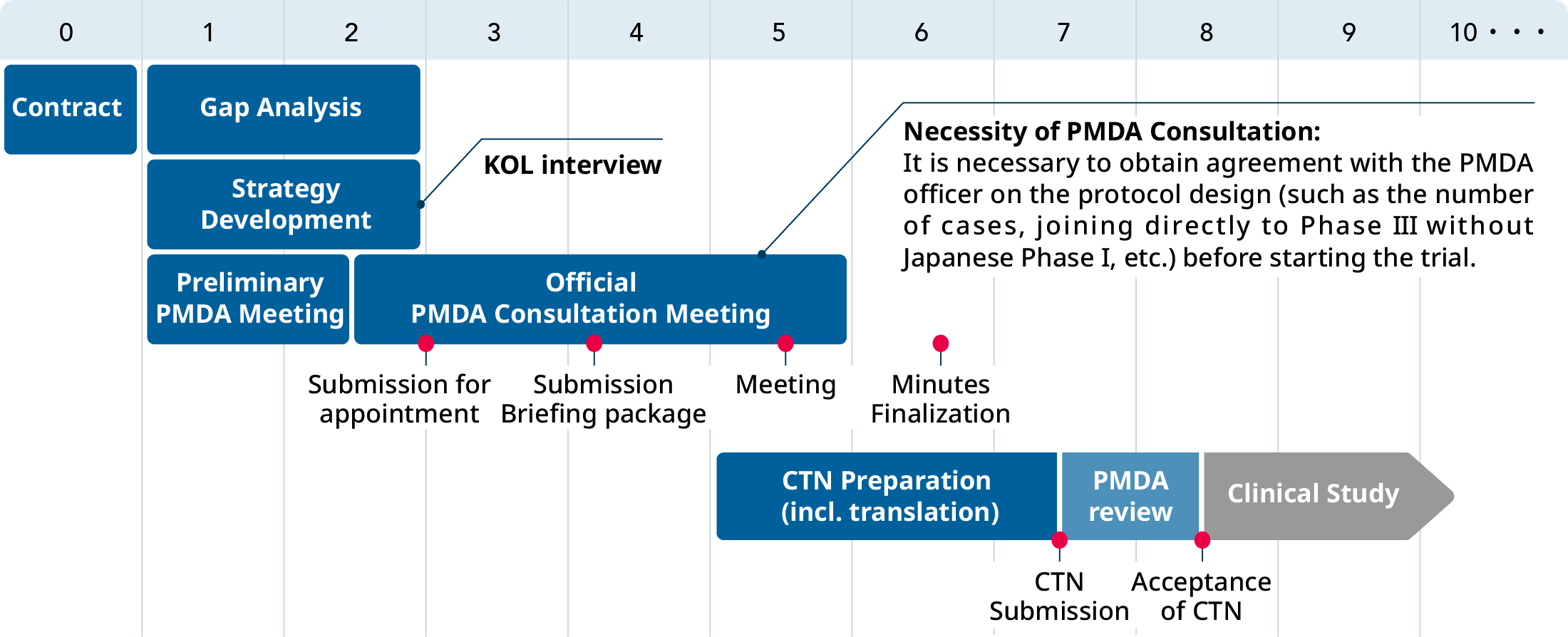
Regulatory reforms have made Japan more accessible to foreign companies, positioning it as a market that can be seamlessly integrated into global development strategies.
Recent Changes to Pharmaceutical Regulations in Japan
(1)
Relaxation of Requirements for Phase Ⅰ Trials in Japanese Patients in Global Clinical Trials
PMDA clarified that Phase Ⅰ trials in Japanese patients—which were previously required as a general rule—are no longer mandatory when participating in global clinical trials. Going forward, it will be important to scientifically demonstrate that there are no significant safety or tolerability concerns in Japanese patients.
(2)
Simplification of Biosimilar Application Data
When ethnic differences have a minimal impact, overseas clinical trial data may be utilized, eliminating the need to conduct trials specifically involving Japanese participants.
(3)
Revision of the Orphan Drug Designation System
Receiving designation as an orphan drug or similar designation enables access to various support measures. This notification outlines a more flexible approach to determining the number of eligible patients and the possibility of designation at early stages of development.
(4)
Pharmaceutical Price Reform
New surcharges were introduced to recognize the early introduction of drugs to Japan, and the evaluation criteria for pediatric medications were revised. In addition, a system was improved to ensure the appropriate evaluation of innovative new drugs, including the addition of new requirements for the New Drug Creation Surcharge.
(5)
Relaxation of the Conditional Approval System
For products that require a lengthy evaluation process, conditional approval in Japan will be actively considered if the product has already been approved overseas and post-approval verification trials are planned. It was also indicated that exact matches in treatment lines and diseases between Japanese data and post-approval trials may not be required.
The 2025 amendments aim to ensure faster and more reliable patient access to quality-assured medicines, responding to recent supply disruptions and changes in the innovation environment. Key measures include the expanded Conditional Approval System, which enables earlier approval of drugs with reasonably predictable clinical efficacy, as well as the encouragement of pediatric development planning at the time of New Drug Application (NDA) submission. In parallel, Japan has launched a public–private fund to support the practical implementation of innovative medicines, further strengthening its regulatory and development ecosystem.
The Four Pillars of the 2025 Amendments to Japan's PMD Act
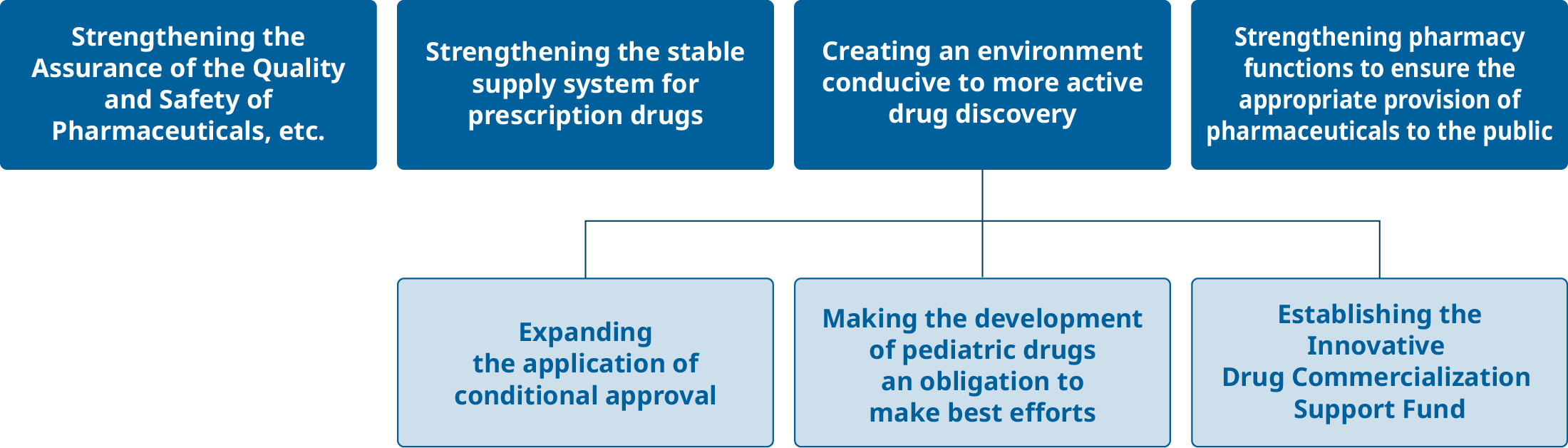
Under the previous framework, approval at the exploratory trial stage was theoretically possible but rarely used in practice. The latest amendments address this gap by allowing early approval at the exploratory stage for serious diseases with limited treatment options, provided that efficacy and safety can be reasonably predicted. The revised approach is aligned with global frameworks such as the U.S. Accelerated Approval and the EU Conditional Approval, with clearer and more transparent decision criteria expected. In addition, a December 2023 MHLW notification clarified that Japan-specific Phase Ⅰ studies are no longer mandatory prior to participation in global trials, further shortening overall development timelines in Japan.
Not necessarily.
According to the PMDA notification “Basic principles for conducting phase Ⅰ studies in Japanese prior to initiating multi-regional clinical trials including Japan for drugs in which early clinical development is preceding outside Japan” (issued on December 25, 2023), a Phase Ⅰ study in Japanese participants is not mandatory in all cases.
If available clinical data can sufficiently explain the safety and tolerability of the investigational product in Japanese patients, Japan may be directly included in a multi-regional clinical trial (MRCT) without conducting a separate Japan-specific Phase Ⅰ study. The final decision is made on a case-by-case basis, based on a comprehensive evaluation of all available data.
A Japan-specific Phase Ⅰ study may be considered unnecessary when there is sufficient scientific justification.
For example, Japan may be included in a global development program without a separate Phase Ⅰ study in the following cases:
In such situations, Japan may directly participate in Phase Ⅱ or Phase Ⅲ multi-regional clinical trials.
The optimal development strategy is assessed through consultation with the PMDA.
In practice, the need for a Japan-specific Phase Ⅰ study is determined based on a comprehensive evaluation of multiple factors, including:
For this reason, early consultation with the PMDA is strongly recommended when planning development in Japan, to confirm the most appropriate and efficient development approach.
CMIC provides comprehensive support for foreign biotech companies entering the Japanese market, covering PMDA consultation and the strategies for participating in global clinical trials including assessment of the need for Phase Ⅰ trials in Japan.
Not sure how Japan fits into your global program?
Talk to CMIC about a data-driven Japan strategy today.
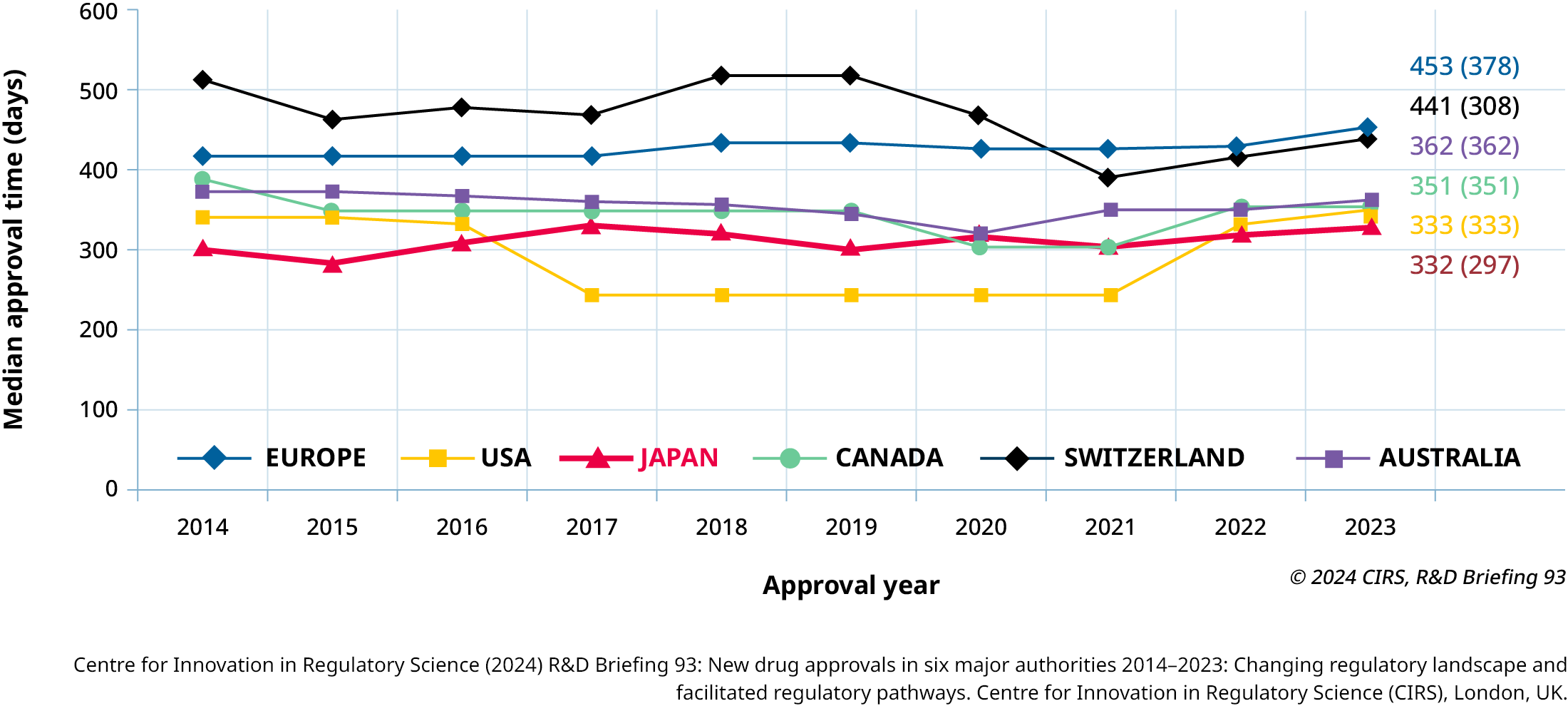
According to the R&D Briefing published in 2024 by the Centre for Innovation in Regulatory Science (CIRS) presented the median time required for the approval of new active substances (NAS) by six major regulatory authorities—the European Medicines Agency (EMA), the U.S. Food and Drug Administration (FDA), Japan’s Pharmaceuticals and Medical Devices Agency (PMDA), Health Canada, Swissmedic, and the Therapeutic Goods Administration (TGA).
This analysis serves as an indicator of regulatory agency performance and the time it takes for medicines to reach patients, suggesting that approval times in Japan is shorter than other regulatory agencies.
Median approval time for new active ingredients by six regulatory agencies
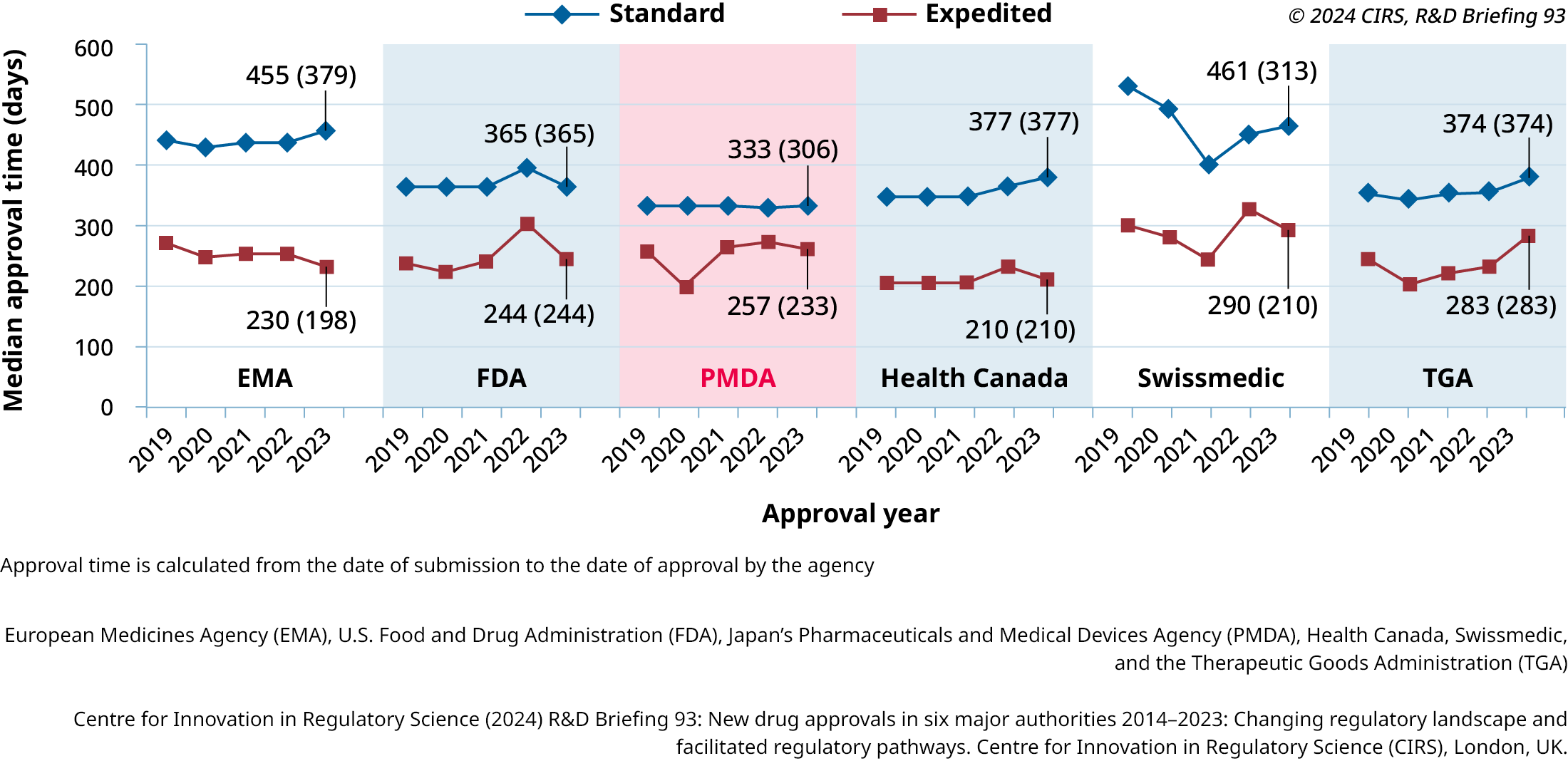
In 2023, PMDA achieved the shortest median approval timeline under standard review, at 333 days, with expedited reviews completed in 257 days.
The gap between expedited and standard review timelines was only 76 days at PMDA, compared with 225 days at EMA, underscoring the PMDA’s high and consistent review efficiency. These results demonstrate that Japan offers a predictable and efficient regulatory environment for EBP companies pursuing timely approvals.
Median approval time for standard and accelerated reviews
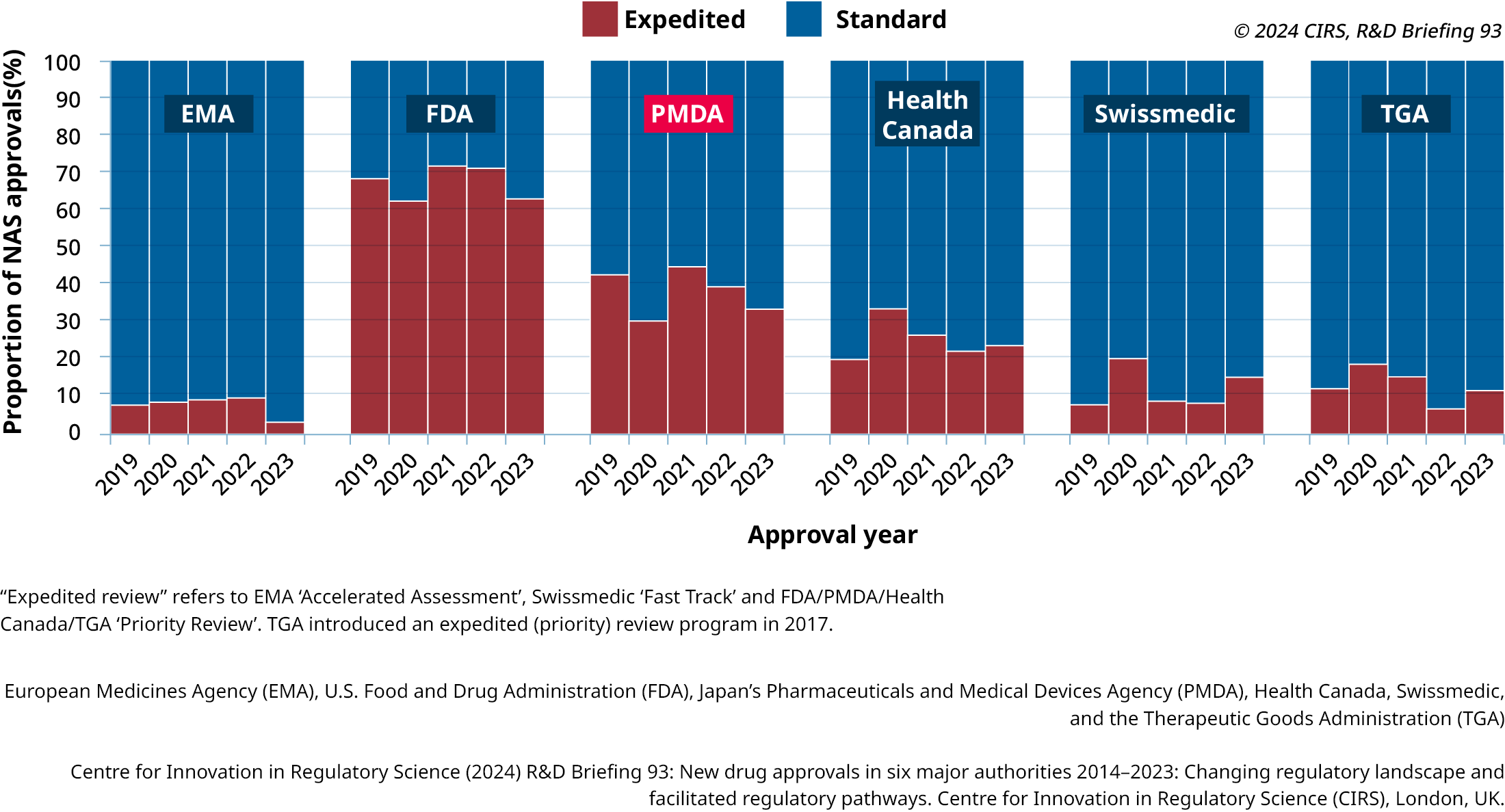
In 2023, the share of products reviewed under expedited pathways was highest at the FDA (62%), followed by PMDA (33%).
These figures highlight that the PMDA makes relatively active use of expedited review pathways among major regulatory authorities, offering greater opportunities for early approval of innovative therapies and products addressing high unmet medical needs—an important consideration for EBP companies planning global development and launch strategies.
Ratio of standard reviews to accelerated reviews
The following programs enable the expedited approval of orphan drugs and innovative medicines and are expected to be of significant benefit to foreign pharmaceutical companies and biotech startups.
| Program Name | Overview | Key Benefits and Features | Main Eligibility Criteria and Targets |
|---|---|---|---|
| Priority Review System | A system designed to shorten the approval review period—which typically takes about 12 months—to approximately 6 to 9 months for new treatments addressing high unmet medical needs. |
|
New treatments with high unmet medical needs |
| Conditional Early Approval System | A system that enables the early approval of drugs for rare and serious diseases. |
|
|
| Designation of Innovative Pharmaceutical Products System | A system designed to promote the rapid approval of innovative drugs and medical devices in Japan. |
|
|
| Emergency Approval System | A system that allows for exceptional approval in emergencies, such as the spread of infectious diseases. | Rapid approval is possible in emergencies without following standard procedures | Emergencies such as the spread of infectious diseases |
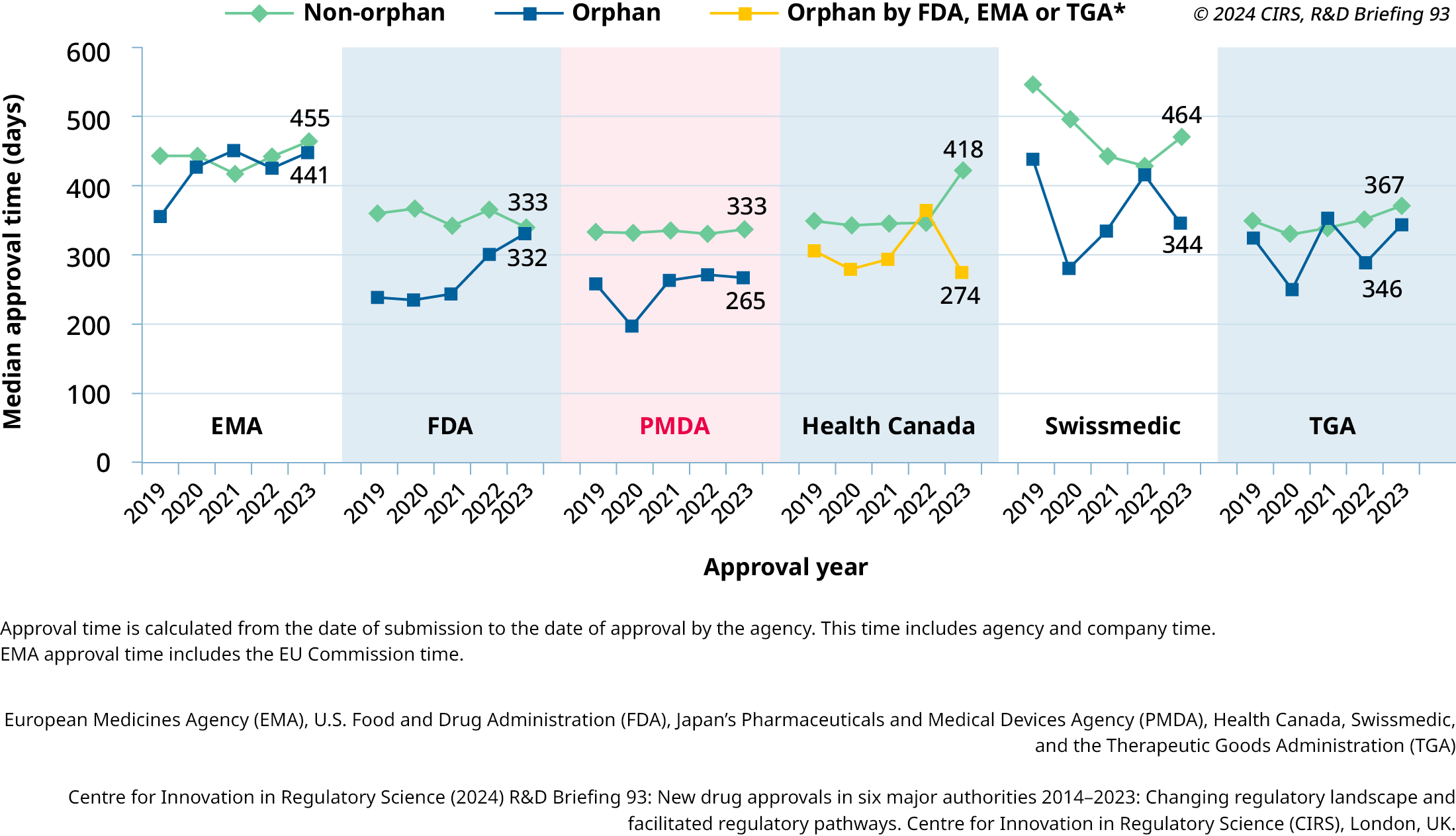
PMDA had the shortest median approval time for orphan drugs in 2023 (265 days). This was the result of PMDA conducting accelerated reviews to address unmet medical needs.
Median Approval Time for Orphan Drugs
In Japan, pharmaceuticals are broadly categorized into prescription drugs, which are covered by health insurance, and over-the-counter drugs, which are not covered by health insurance. Prescription drugs are determined under a nationally standardized drug pricing system, while over-the-counter drugs are priced freely.
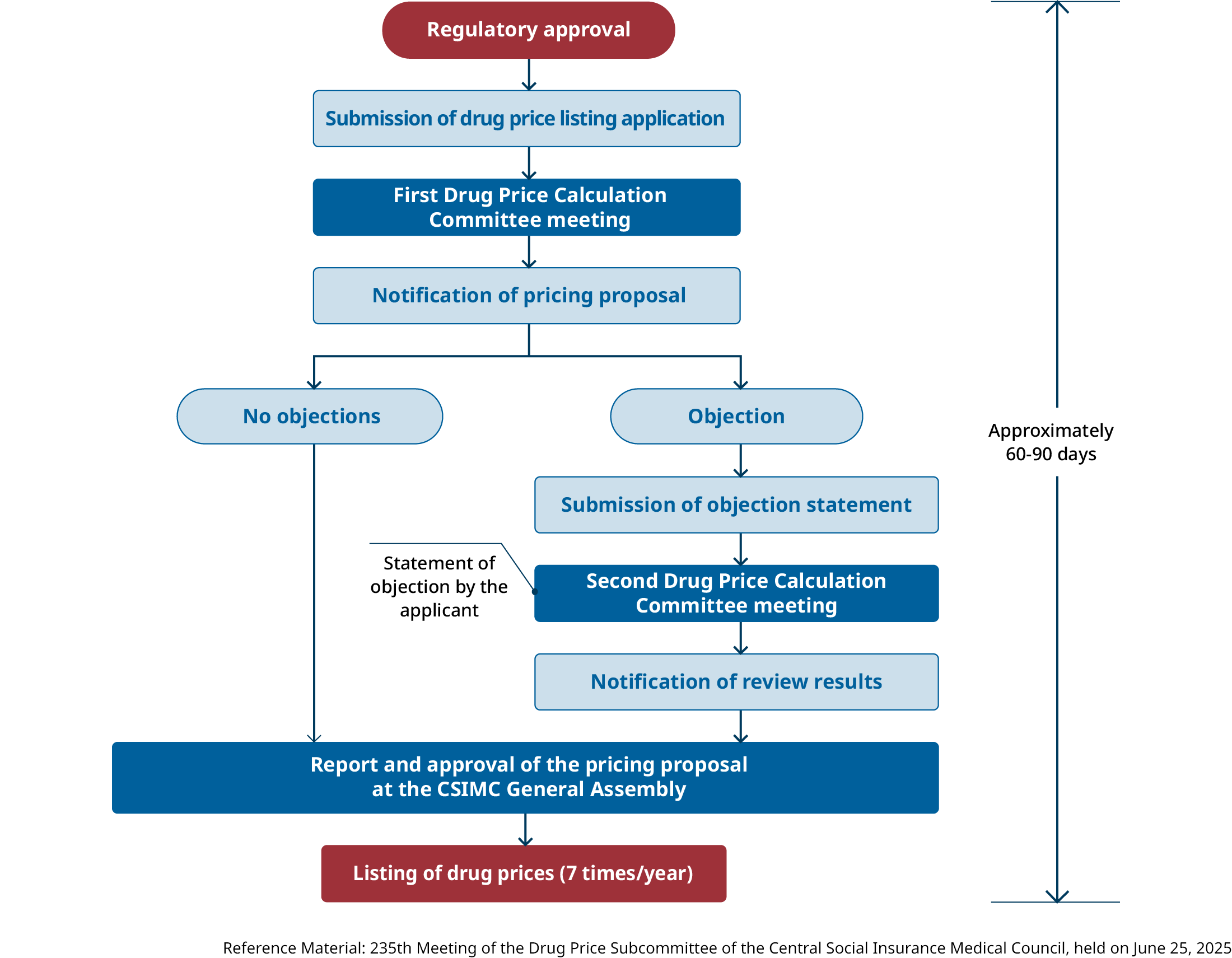
After marketing authorization is granted for a new drug, the pharmaceutical company submits a price listing application and supporting documents to the Ministry of Health, Labour and Welfare (MHLW). The proposed price is reviewed by the Drug Pricing Organization, a subcommittee of the Central Social Insurance Medical Council (Chuikyo), and a draft price is issued.
If the company disagrees with the calculation, a formal objection may be submitted. Once the price is approved by the Chuikyo plenary session, the product is listed on the National Health Insurance (NHI) drug price list.
Because Japan does not require prolonged negotiations with individual insurer, the time from approval to reimbursement is relatively short, enabling clearer ROI predictability and rapid revenue generation for pharmaceutical companies. In emergency situations, such as infectious disease outbreaks, exceptional measures may allow for accelerated approval and reimbursement.
Drug Price Listing Process for New Pharmaceuticals
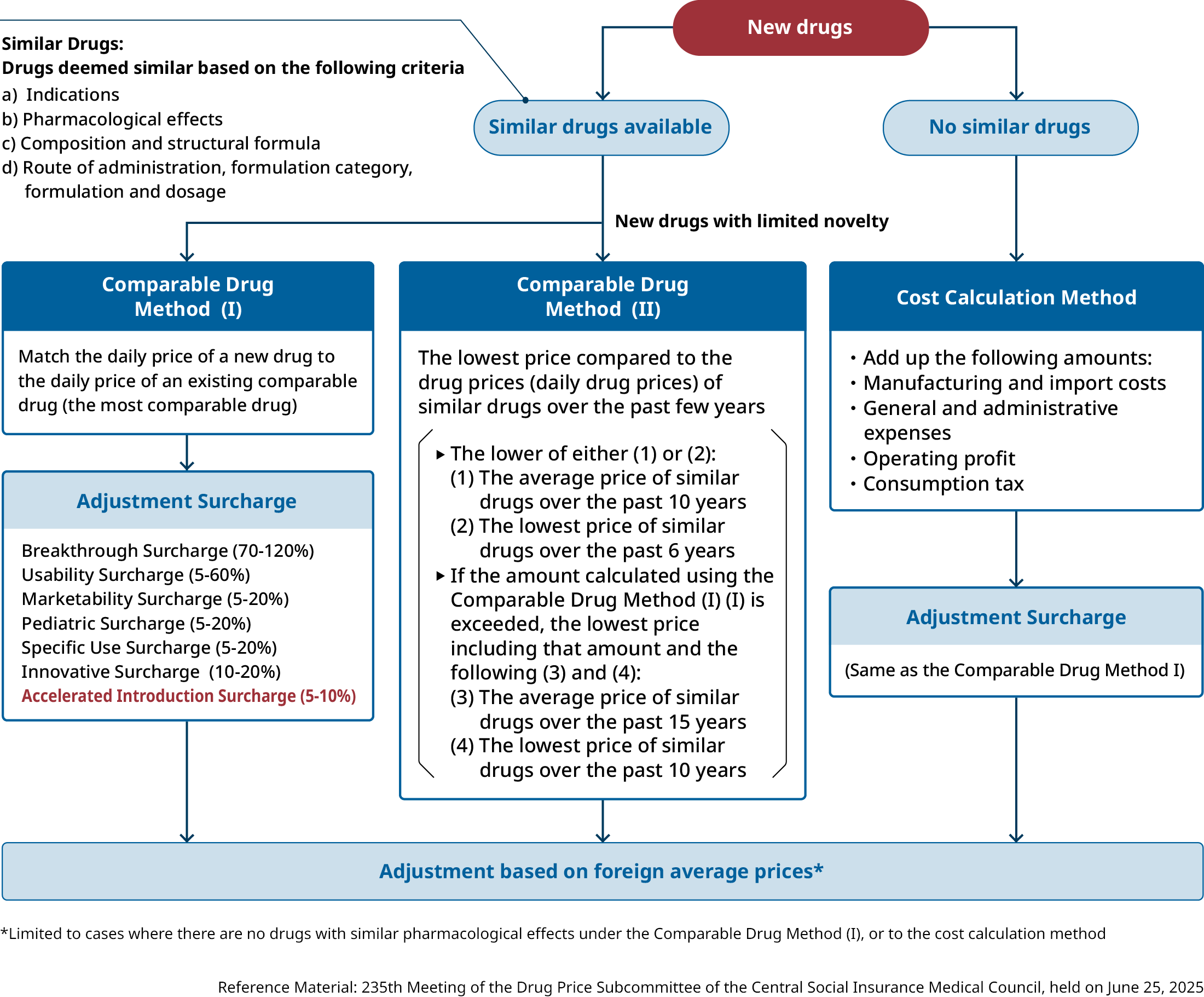
When a comparable drug exists, pricing is determined under the Similar Efficacy Comparison Method.
For new drugs with a relatively high level of innovation, Similar Efficacy Comparison Method (Ⅰ) is applied, under which the daily drug price is benchmarked against the most comparable existing product. Pricing premiums may be added based on factors such as innovativeness, clinical usefulness, and market potential.
If a comparable drug exists but the new product shows limited novelty, Similar Efficacy Comparison Method (Ⅱ) is used, and the price is set at the lowest daily price among comparable drugs listed in recent years.
When no comparable drug exists, the Cost‑Based Pricing Method is applied, with the price calculated based on manufacturing or import costs and other standard cost components. As with Method I, pricing premiums may be granted depending on the product’s innovation and value.
Basic Principles for Drug Price Calculation (at the Time of Listing)
Drug prices are revised annually with the aim of curbing medical costs, ensuring fair price adjustments, improving the quality of medical care, and promoting drug development.
Specifically, this involves reviewing drug prices based on current market prices.
CMIC provides comprehensive support based on the latest regulations, including the evaluation of projected drug prices, the development of pricing strategies, preparation for submissions, pricing negotiations, and consultation on regulatory inquiries.
Uncertain about price potential in Japan?
Speak with CMIC’s experts!